Trading Futures Live With Prop Firm Capital
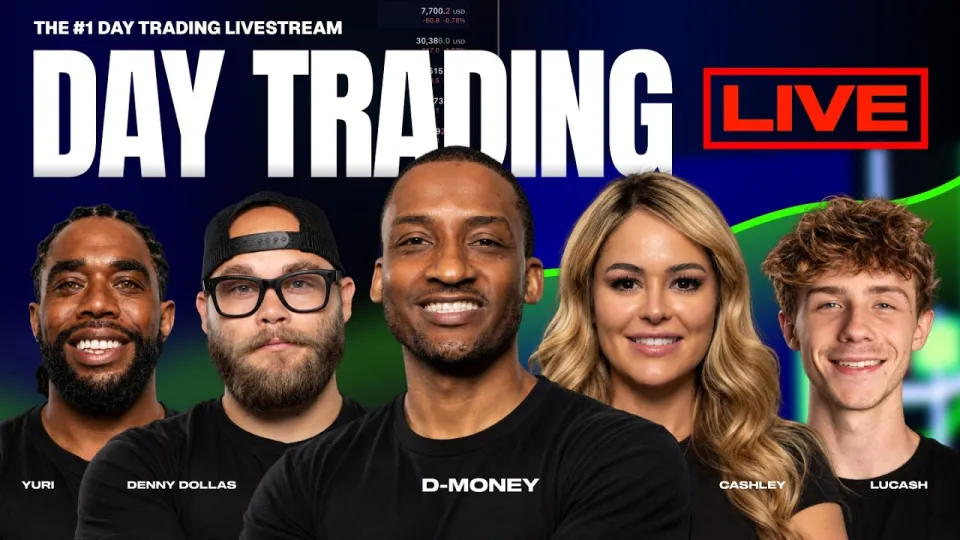
Video: LIVE DayTrading! #1 Watched Futures Trading Show!
Need articles like this for your video? They help promote it on YouTube and Google — order them in the Telegram bot @sat_sit_bot. Articles with your video embedded are written and posted by the bot itself — on popular topical sites (no ads). Try it free: 50 articles on us.
· based on the channel Patrick Wieland
Trading in the futures market means buying and selling standardized contracts such as the E-mini S&P 500 (ES), Nasdaq (NQ), crude oil (CL) or gold (GC), where every tick carries a fixed dollar value. Retail traders usually access that market through a broker or, increasingly, through a prop firm evaluation that grants access to a funded account for a fraction of the capital required. Live streams like the BDH show on the Patrick Wieland channel exist to make that process visible in real time, from the first trade of the session to the payout request.
What trading futures on a live stream actually shows
A live futures trading stream is a real-time record of order flow, risk decisions and platform mechanics rather than a highlight reel. On the BDH floor, four traders work simultaneously: Patrick Wieland, Damareous Young, Lucas Kennard and Denny Jones, broadcasting from South Florida and California. Viewers see entries, stops, scaling decisions and the moments when a trader chooses to stand aside. That last part matters more than most beginners expect, because flat is a position and the sessions with no trades often protect an account better than the sessions with five.
The format also exposes the operational side of the business. Prop firm reviews, discount codes, ranking lists and giveaways run alongside the charts, which is why the stream doubles as a comparison tool for traders deciding where to spend an evaluation fee.
How prop firm capital fits into a futures trading routine
Prop firm capital is simulated money that a trader rents through an evaluation, and the payout structure is what makes it attractive. The ranking published by OnlyPropFirms puts Lucid Trading first, TakeProfitTrader second and Apex Trader Funding third, followed by Tradeify, Legends Trading, BluSky Trading, TradeDay and MyFundedFutures. Each of those firms sells a different combination of account size, profit target, drawdown rule and profit split, and the differences decide whether a strategy survives the evaluation.
- Choose an account size that matches your average stop, not the biggest number on the pricing page.
- Read the drawdown rule twice. A trailing drawdown that follows unrealized profit behaves very differently from a static one.
- Check the consistency rule. Some firms cap how much of the profit target can come from a single day.
- Confirm the payout schedule and whether the first payout is available after a fixed number of winning days.
- Trade the evaluation with the same size you would trade a funded account, because the habits transfer either way.
A trader who passes a $50,000 evaluation with reckless size usually loses the funded account within a week, since the daily loss limit stays the same while the psychological weight of real payouts increases.
Copy trading and why it changes the risk conversation
Copy trading lets a follower mirror the positions of another trader automatically, and in futures it is usually offered through a platform that links accounts. The appeal is obvious: a trader with no time to watch the open can still take the same entries as someone who does. The catch is that copying removes the decision layer, so the follower inherits every mistake at full size, including the ones made during a drawdown.
Before copying anyone, verify three things: the track record length, the maximum drawdown on that record, and whether the results come from a funded or an evaluation account. A strategy that survives a $2,500 trailing drawdown is not the same product as one that survives a $10,000 static drawdown, even if both show the same win rate on a screenshot.
The questions traders ask most about setups and courses
The most common questions in live futures chat are about which setup is being traded and where to learn it. Patrick Wieland sells a two-hour course for $99 through onlypropfirms.com that covers the strategy he teaches and trades on stream. That price point is low relative to most trading education, which is worth noting, but no course replaces screen time.
A setup is only a set of conditions. Two traders can take the same entry and get different results because of position sizing, stop placement and how they handle a losing streak. If you buy any course, the useful output is a written checklist you can score yourself against after each session, not a feeling that you now know the secret.
Risk rules that keep a futures account alive
Surviving in futures trading is mostly a risk management exercise, and the math is unforgiving because of leverage. A single NQ contract moves $20 per point, so a 25-point adverse move is $500 before commissions. Three contracts turn that into $1,500, which can be most of a daily loss limit on a small account.
Practical guardrails that experienced streamers repeat:
- Set a daily stop in dollars and stop trading when it is hit, regardless of how the chart looks.
- Size positions from the stop distance, not from the account balance.
- Avoid adding to a losing position; averaging down is the fastest route to a blown evaluation.
- Track results by setup, not by day, so you can tell whether an edge exists or you are just riding variance.
- Take breaks after two consecutive losses, because tilt costs more than any single bad entry.
None of these rules generate profits on their own. They exist to keep a trader in the game long enough for an edge to show up in the data.
Watching a live trading floor without copying it
A live stream is best used as a study tool, not a signal service. Watching four traders react to the same market conditions reveals how differently the same information can be interpreted, and that comparison is more educational than any single call. Note the times of day when volatility appears, how each trader sizes into it, and what they do after a loss.
The BDH broadcast also functions as a news feed for the prop firm industry, since rankings, discounts and rule changes are covered as they happen. For anyone comparing Lucid Trading, TakeProfitTrader, Apex Trader Funding or the smaller firms on the list, that coverage shortens the research process considerably.
Final thoughts on trading with live futures capital
The Patrick Wieland channel presents live futures trading as a job with rules, not a lottery, and the BDH crew demonstrates that framing every trading day. The useful takeaways are structural: pick a prop firm whose drawdown rules match your style, size from your stop, respect a daily loss limit, and treat every stream as practice rather than a signal. Copy trading and paid courses can shorten the learning curve, but neither transfers risk to someone else. The traders who last are the ones who survive their own worst week.
Key takeaways
- Futures day trading is done on index and commodity contracts like ES, NQ, CL and GC, where each tick has a fixed dollar value.
- Prop firms such as Lucid Trading, TakeProfitTrader and Apex Trader Funding give traders simulated capital in exchange for a one-time evaluation fee.
- The BDH crew streams live every trading day from South Florida and California, led by Patrick Wieland alongside Damareous Young, Lucas Kennard and Denny Jones.
- A two-hour course covering Patrick Wieland's trading strategy is sold for $99 through onlypropfirms.com.
- Most prop evaluations fail because of daily loss limits and trailing drawdown, not because of a lack of setups.
Questions & answers
What is the best prop firm for a beginner futures trader?
There is no single best firm, but the OnlyPropFirms ranking places Lucid Trading, TakeProfitTrader and Apex Trader Funding at the top. A beginner should compare drawdown type, profit target and payout schedule rather than headline account size. A smaller account with a static drawdown is usually easier to pass than a large one with a trailing drawdown.
Where can I learn the setup traded on the BDH stream?
Patrick Wieland sells a two-hour course for $99 through onlypropfirms.com that covers the strategy he teaches and trades live. The course explains the conditions behind the entries shown on stream. It does not replace practice, since execution and sizing decide the outcome.
Is copy trading futures safer than trading your own account?
No, copy trading transfers the same risk at the same size while removing your control over the decision. You still absorb every loss during the copied trader's drawdown. Before copying anyone, check the length of the track record, the maximum drawdown and whether the results come from a funded or evaluation account.
How much money do I need to start trading futures?
A prop firm evaluation can start in the low hundreds of dollars for accounts in the $25,000 to $50,000 range, which is far less than funding a personal futures account. The real cost is the risk per trade, since one NQ contract moves $20 per point. Size positions so a normal stop is a small percentage of the account.
Source: LIVE DayTrading! #1 Watched Futures Trading Show! · Markdown version